
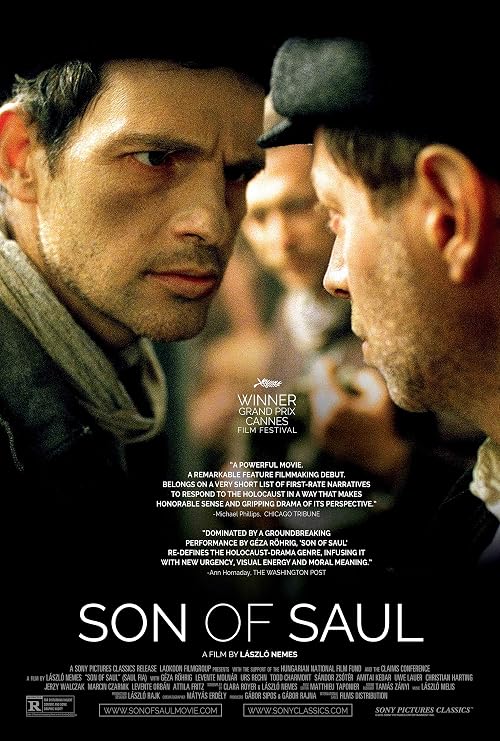
An Immersive Holocaust Experience
“Son of Saul” is a hauntingly immersive film that delves deep into the harrowing circumstances of the Holocaust. Directed by László Nemes, this 2015 masterpiece is an evocative portrayal of human resilience amidst unimaginable despair. Shot in a distinctive style, the movie offers a gripping and uniquely personal experience that stands apart from traditional Holocaust narratives.
Visual and Cinematic Mastery
One of the most striking aspects of “Son of Saul” is its unique cinematography. Nemes employs a tight aspect ratio and shallow depth of field to create an oppressive sense of immediacy and intimacy. The camera follows the protagonist, Saul Ausländer, played brilliantly by Géza Röhrig, through the labyrinthine horrors of Auschwitz, offering viewers an almost first-person perspective.
A Story of Redemption and Humanity
At its core, “Son of Saul” tells a profoundly human story. Saul, a Jewish prisoner and member of the Sonderkommando, discovers the body of a boy he believes to be his son. Determined to provide the child with a proper burial, Saul embarks on a perilous journey that highlights themes of redemption, faith, and personal determination amidst chaos.
Unsettling Sound Design
In addition to its visual prowess, the film’s sound design plays a crucial role in shaping the narrative. The ambient noise of the concentration camp is ever-present, enhancing the film’s unsettling atmosphere and immersing the audience fully into the world Saul inhabits. The absence of a traditional musical score further accentuates the raw, unfiltered reality of the events depicted.
Remarkable Performances
Géza Röhrig delivers a performance that is both subtle and profound. His portrayal of Saul is one of quiet intensity, communicating volumes through expressions and gestures rather than dialogue. The supporting cast complements his performance, adding depth to the film’s complex depiction of camp life.
Cultural and Historical Significance
“Son of Saul” is not just a film; it is a crucial reminder of one of history’s darkest periods. By focusing on intimate personal stories within the broader tragedy of the Holocaust, the film invites audiences to reflect on the broader implications of humanity, memory, and history. Its approach is both respectful and unflinching, forcing viewers to confront the horrors without sensationalizing them.
Exploring Audience Reactions
“Son of Saul” has been praised by both critics and audiences for its bold narrative style and powerful storytelling. Many viewers have found the film to be an intense and emotional rollercoaster, while others appreciate its commitment to historical authenticity. Thanks to its innovative cinematic techniques and deep thematic exploration, “Son of Saul” resonates with diverse audiences, provoking thought and discussion long after the credits roll.