
Overview
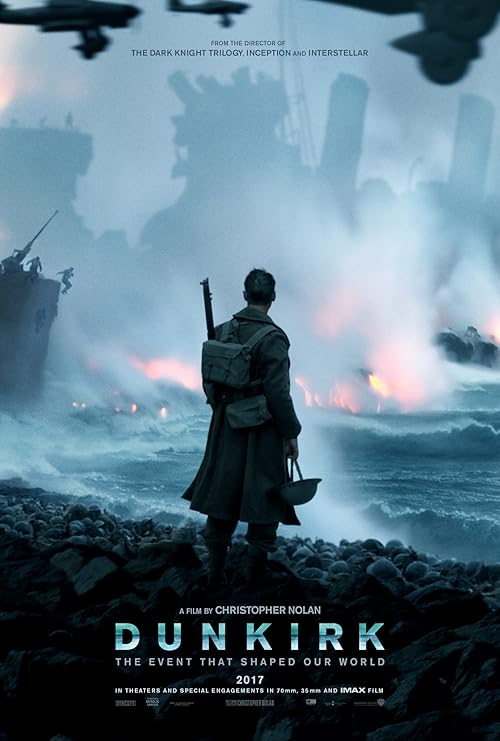
Christopher Nolan’s 2017 war epic *Dunkirk* stands out as a gripping, immersive, and emotionally resonant film that captures the intensity of one of World War II’s most pivotal moments. Without revealing any spoilers, this review focuses on the film’s cinematic impact, direction, performances, and technical brilliance, all while remaining accessible for viewers who have yet to experience it.
Cinematic Experience
One of the most striking aspects of the film is its ability to transport the audience directly into the tension and urgency of the evacuation. Nolan’s unique approach to storytelling uses interwoven timelines, and although they differ in duration, they come together seamlessly. This structure keeps the viewer engaged throughout, constantly shifting perspectives to maintain suspense and emotional depth. The visual style is grounded, realistic, and clean, heightening the sense of authenticity in every frame.
Direction and Atmosphere
Nolan’s direction is precise and purposeful. He avoids excessive dialogue, instead relying on visual storytelling and sound design to convey emotion and stakes. This minimalist approach amplifies the tension, allowing viewers to feel the fear, desperation, and hope that permeate the film. The atmosphere remains intense from start to finish, helped by stunning cinematography and a commitment to capturing the scale of the event in a realistic manner.
Performances
The cast delivers impactful performances that emphasize humanity over heroism. Each character embodies a different facet of the struggle and uncertainty of the time. While the film does not focus heavily on individual backstories, the emotions expressed through subtle acting choices add depth to the overall narrative. The restrained yet powerful performances help ground the story and convey the gravity of the situation without overdramatization.
Technical Brilliance
The film excels technically, especially in its use of practical effects, minimal CGI, and breathtaking aerial sequences. The sound design is particularly notable, blending Hans Zimmer’s iconic score with the natural sounds of war to create a heartbeat-like tension. The music employs a ticking motif that drives the pacing, making each moment feel urgent and consequential. Combined with sweeping visuals and immersive audio, the technical craftsmanship enhances the film’s realism and emotional impact.
Why It Stands Out
Instead of relying on typical war-movie conventions, the film focuses on the experience of survival. Its grounded storytelling and commitment to realism make it a powerful portrayal of endurance, unity, and the human spirit. The film doesn’t overwhelm with sentiment; instead, it highlights resilience through finely crafted scenes and thoughtful pacing.
Exploring Audience Reactions
Many viewers appreciate the film’s immersive style, particularly its use of sound and visuals to create atmosphere. The unconventional narrative structure has also sparked discussions, with audiences praising its originality and emotional impact.